
Leadership begins
between people.
What makes people willing to disagree, take responsibility and grow together? These pages look at trust, psychological safety and leadership that still works when the week gets complicated.
What shapes a workplace.
Sometimes one question changes a conversation. Sometimes we need to understand why a familiar way of working no longer holds. This is a place for research, perspective and something to carry into the next working day.
Psychological safety
In 1999 Amy Edmondson described psychological safety as a shared belief that the team is safe for interpersonal risk: asking a question, admitting a mistake, or disagreeing. It is not consensus, and it is not niceness. In teams that learn, the disagreement shows up earlier.
Trust-based leadership
Mayer, Davis and Schoorman described trust in 1995 as a willingness to be vulnerable to another party, based on ability, benevolence and integrity. A value on the wall does not change that judgement. What changes it is whether the leader keeps what was said when keeping it costs something.
Human-centered leadership
Thomas Burénius writes from workplaces where many people take their first job, in retail, events and logistics. The starting point on this site is that people need both a clear frame and room to use their judgement. Kindness without a frame is vagueness. A frame without listening becomes control.
Employee engagement
William Kahn described engagement in 1990 as people bringing themselves into the work, physically, cognitively and emotionally, and disengagement as withdrawing that self. A survey can produce a number. It does not explain why someone stops saying what they see.
Leadership books
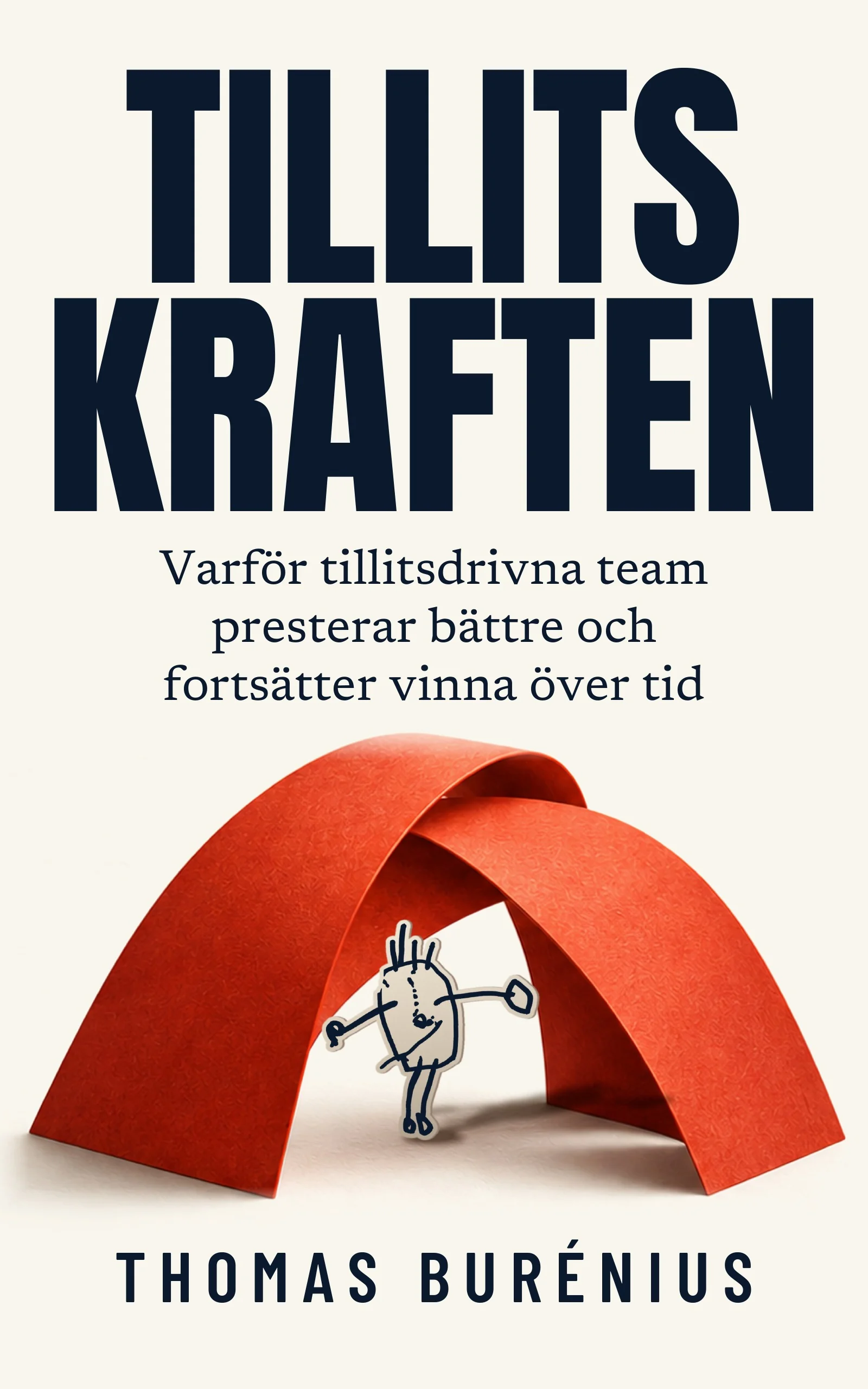
A useful leadership book offers a perspective to try in a real week, not a list to repeat. Tillitskraften is the Swedish book. Trustforce is the English reading sample. The shop link on this site sells the Swedish ebook, not the English edition.
Organizational culture
Culture shows when the plan meets a Tuesday: who may interrupt, what happens to a mistake, and whether control rises as soon as something matters. Google’s Project Aristotle found psychological safety to be the strongest difference between more and less effective teams in their own data. That is not proof for every organisation. It is a reason to look at the silence before looking at the tools.
From a thought to one concrete week.
Take the thoughts further.
In Tillitskraften, Thomas Burénius explores how trust, responsibility and human leadership can become part of an ordinary week. The shop link is the Swedish ebook, not Trustforce.